
BEIJING, CHINA – As global industries demand ever-higher operating temperatures and tighter energy efficiency, the role of advanced insulation materials has become critical. Among the most vital components enabling these demanding conditions are rigid graphite felt boards, specifically those manufactured from Rayon and Polyacrylonitrile (PAN) precursors. These engineered carbon-based panels provide superior thermal management, mechanical stability, and purity in applications ranging from vacuum furnaces to semiconductor processing and energy storage systems. In this article, we explore the characteristics, differences, applications, and performance metrics of Rayon and PAN rigid graphite felts, and highlight CFCCARBON CO., LTD, a leading Chinese manufacturer trusted worldwide for quality and reliability.
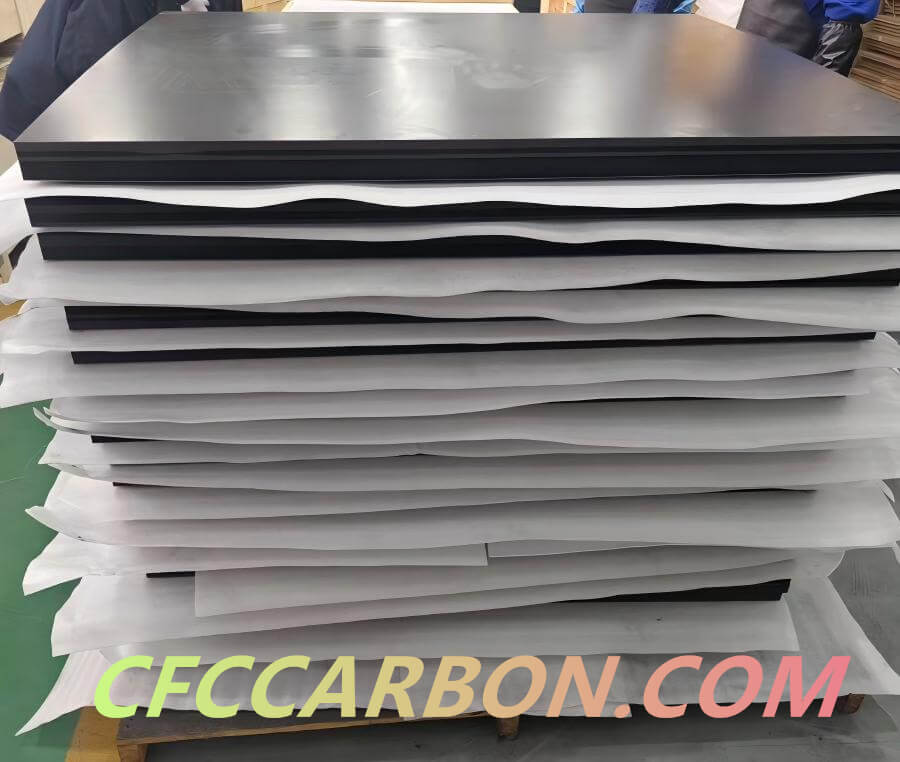
Rayon-short fiber-rigid felt board;
Rayon based, short fiber, rigid graphite felt, rigid graphite board,
Rigid graphite felt boards are high-temperature insulation materials produced by compressing and graphitizing carbon fibers into semi-rigid panels. They combine the low thermal conductivity of traditional soft felts with the ease of handling and structural integrity of rigid boards. The choice of precursor—Rayon (cellulose-based) or PAN (polyacrylonitrile-based)—significantly influences the final material’s properties, including thermal conductivity, mechanical strength, purity, and oxidation resistance. Understanding these differences is essential for engineers and procurement specialists seeking to optimize furnace performance, energy consumption, and product lifespan.
Rayon-Based Rigid Graphite Felt: Superior Insulation and Purity
Rayon-based rigid graphite felt is manufactured from cellulose fibers through a multi-step process of carbonization and graphitization. Its microstructure consists of randomly oriented fibers that create a highly porous, lightweight structure with exceptionally low thermal conductivity. This makes Rayon-based felt an outstanding thermal insulator, often achieving conductivity values below 0.5 W/m·K at 1000°C. Additionally, Rayon-derived materials can reach purity levels exceeding 99.99% carbon with ash content as low as 20 ppm after purification, making them ideal for contamination-sensitive processes like semiconductor crystal growth and heat treatment of specialty alloys. The material also exhibits good flexibility, allowing easy cutting and installation into complex furnace geometries. However, its mechanical strength is moderate compared to PAN-based alternatives, and it is less resistant to oxidation in air above 400°C.
PAN-Based Rigid Graphite Felt: High Strength and Electrical Conductivity
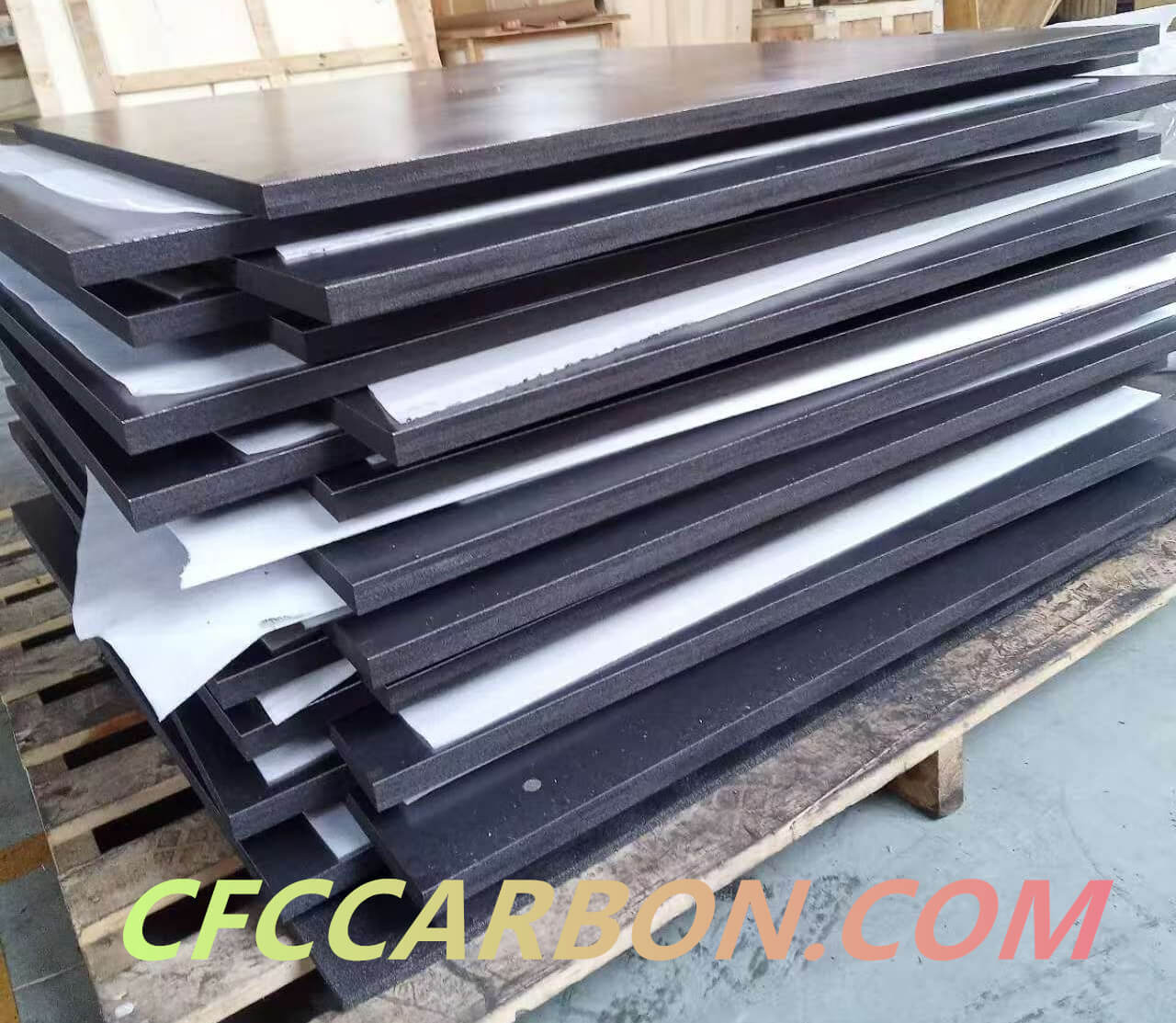
PAN-short fiber-rigid felt board
PAN-based rigid graphite felt is derived from polyacrylonitrile fibers, which undergo stabilization, carbonization, and high-temperature graphitization. The molecular structure of PAN enables a higher degree of graphitization, resulting in superior mechanical strength—flexural strength can reach 1.5 MPa or more—and enhanced electrical conductivity. These properties make PAN-based felts suitable for structural applications, load-bearing insulation, and components that must endure thermal cycling and mechanical stress. They are also more resistant to oxidation than Rayon-based felts, maintaining stability in mildly oxidizing environments. In energy storage, PAN felts serve as electrodes in vanadium redox flow batteries due to their high surface area and electrochemical activity. However, their thermal insulation efficiency is slightly lower than Rayon-based boards, and they tend to be more expensive due to the higher cost of precursor materials.
Key Differences and Selection Criteria
The primary differences between Rayon and PAN rigid graphite felts can be summarized in terms of thermal insulation, mechanical performance, and cost. Rayon-based felts excel in applications where maximum thermal insulation and purity are paramount—such as in high-temperature vacuum furnaces for sintering, brazing, and annealing. PAN-based felts are preferred when mechanical robustness, electrical conductivity, or oxidation resistance are required—for example, in load-bearing furnace linings, battery electrodes, or aerospace thermal protection systems. Both materials are available in various densities (0.15–0.30 g/cm³) and thicknesses, and can be machined into custom shapes. Their maximum service temperature in inert or vacuum environments exceeds 2500°C, with Rayon-based materials often performing slightly better at the extreme upper range due to lower thermal conductivity.
Performance Specifications Compared
When evaluating rigid graphite felt boards for specific applications, it is crucial to compare their key performance indicators:
| Parameter | Rayon-Based Rigid Graphite Felt | PAN-Based Rigid Graphite Felt |
|---|---|---|
| Thermal conductivity @ 1000°C | ≤ 0.5 W/m·K | ≤ 0.7 W/m·K |
| Flexural strength | ~1.1 MPa | ≥ 1.5 MPa |
| Electrical resistivity | Higher (more insulating) | Lower (more conductive) |
| Ash content (purified) | ≤ 20 ppm | ≤ 50 ppm |
| Oxidation resistance | Moderate | Good |
| Typical density | 0.16–0.22 g/cm³ | 0.20–0.30 g/cm³ |
| Maximum service temperature | 3000°C (inert/vacuum) | 2800°C (inert/vacuum) |
These specifications guide engineers in selecting the right material for their processes, balancing insulation efficiency, durability, and cost.
Wide-Ranging Applications Across Industries
Rigid graphite felt boards are indispensable in many high-tech industries. In semiconductor manufacturing, they line crystal growth furnaces and chemical vapor deposition (CVD) reactors, providing thermal uniformity and preventing contamination. The aerospace sector uses them as heat shields, rocket nozzle insulation, and composite curing tooling, benefiting from their lightweight and high-temperature stability. In metallurgy, they insulate vacuum heat treatment furnaces, improving energy efficiency and product quality. The growing energy storage industry employs both types as electrodes in flow batteries and as thermal barriers in lithium-ion battery packs to prevent thermal runaway. Additionally, they are used in research laboratories, glass processing, and high-temperature sintering of advanced ceramics.
Types /classification of rigid graphite felt board
PAN based vs Rayon based;
Short fiber vs Long fiber;
surface processing: foil applied on one side or two sides; CFC applied on one side or two sides; coating on one side or two sides;
Sandwich /laminated vs integral molding;
Different Length, width, thickness available due to special requirements.
CFCCARBON CO., LTD: A Trusted Partner for Global Clients
CFCCARBON CO., LTD has emerged as a premier manufacturer of rigid graphite felt boards and carbon composites in China. With decades of experience and a dedicated R&D team, the company produces high-quality Rayon and PAN-based rigid boards that meet rigorous international standards. Their advanced production facilities, located in Beijing and Hunan, enable flexible manufacturing—from small custom batches to large-volume orders—with consistent quality and competitive pricing. CFCCARBON’s products are widely used by clients in North America, Europe, and Asia, who value the company’s technical expertise, responsive service, and reliable delivery schedules. Whether for standard insulation boards or specialized components with custom dimensions and purity levels, CFCCARBON delivers solutions tailored to customer needs.
The company’s commitment to quality is reflected in its stringent testing procedures and ISO 9001-certified management system. All rigid graphite felt boards undergo thorough inspections for density, thermal conductivity, flexural strength, and purity. CFCCARBON also offers value-added services such as machining, purification, and surface coating to meet specific application requirements. Their technical team provides expert guidance on material selection, helping clients optimize furnace performance and extend equipment life. With a strong reputation built on trust and performance, CFCCARBON continues to expand its global footprint, serving industries ranging from aerospace and energy to electronics and metallurgy.
Contact CFCCARBON for Your High-Temperature Insulation Needs
For more information about Rayon and PAN rigid graphite felt boards, or to request a quote, please contact CFCCARBON CO., LTD:
CFCCARBON CO., LTD
Address: Yizhuang Economic Development Zone, Beijing 100176, China
Marketing Center: +86-18910941489
Tel: +86-10-80828912
Email: potter@cfccarbon.com
Website: www.cfccarbon.com
CFCCARBON looks forward to partnering with you to meet your high-temperature material challenges.
related news /articles:
Carbon & Graphite Insulation Boards | Rigid Graphite Felts manufacturer
Rigid Graphite Felt Boards for Energy Storage Application: Thermal Management Solutions
Manufacture of Rayon-based carbon fibers
Properties and Applications of Graphite felt–CFCCARBON LTD