
1. Introduction: What Are Carbon Fiber Composites?
Carbon fiber composites represent a class of advanced engineered materials where carbon fibers serve as the reinforcement phase within a matrix material—typically carbon, resin, or ceramic. Unlike conventional metals that rely on monolithic structures, composites leverage the synergistic combination of two distinct phases: high-strength carbon fibers provide tensile load-bearing capability, while the matrix transfers loads between fibers and protects them from environmental degradation. As CFCCARBON explains, carbon composites are high-performance materials formed by composite processes with carbon fiber or graphite fiber as reinforcement and pure carbon (such as resin carbon, deposited carbon) as matrix material, belonging to multiphase carbon-based composites. This all-carbon architecture—often referred to as carbon/carbon (C/C) composites—combines the exceptional strength-to-weight ratio of carbon fibers with the thermal and chemical stability of carbon matrices, making these materials indispensable in industries where extreme durability under harsh conditions is paramount-66.
2. Product Classification: Tailored Architectures for Every Requirement
2D 2.5d, CFC, CFRC, CC, carbon, fiber, composites, molds moulds cylinders filament wound manufacturer (1)
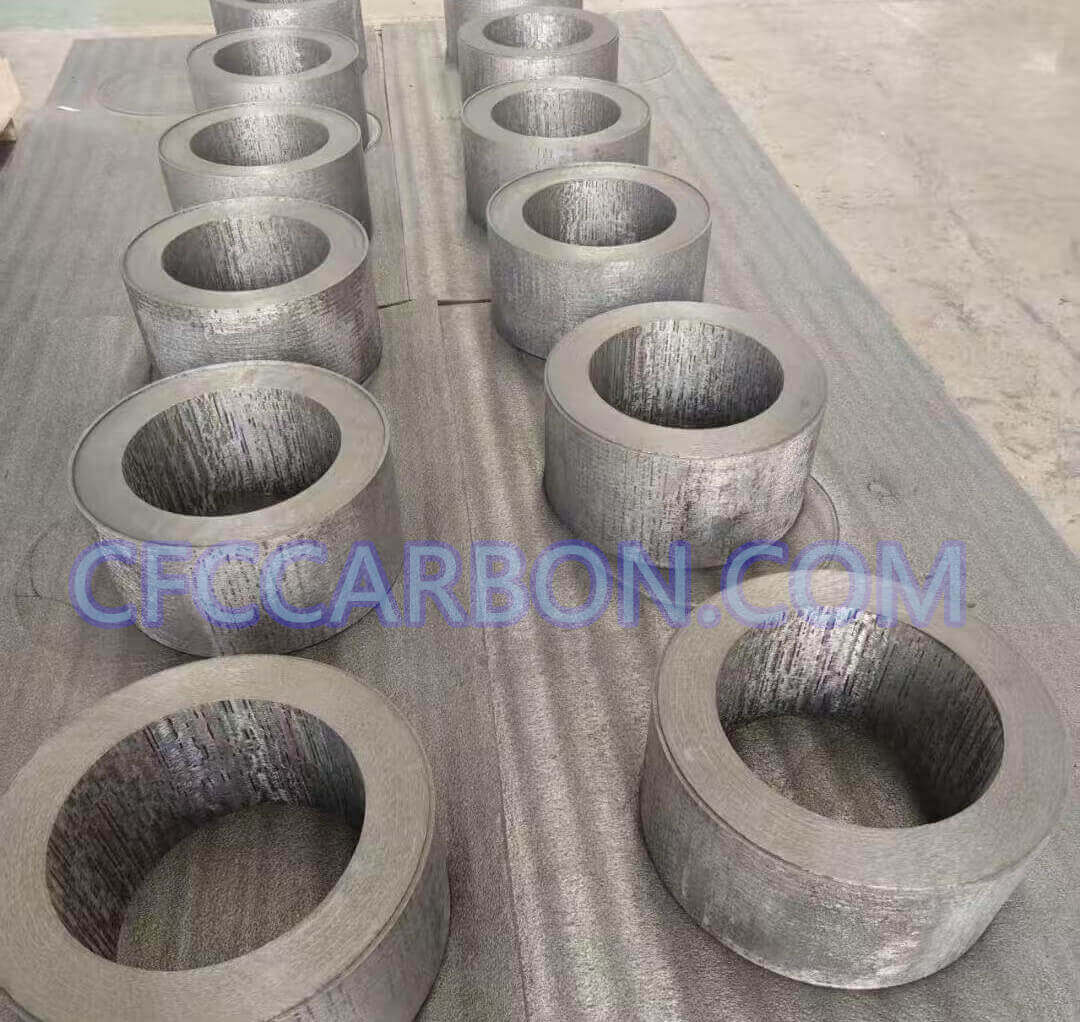
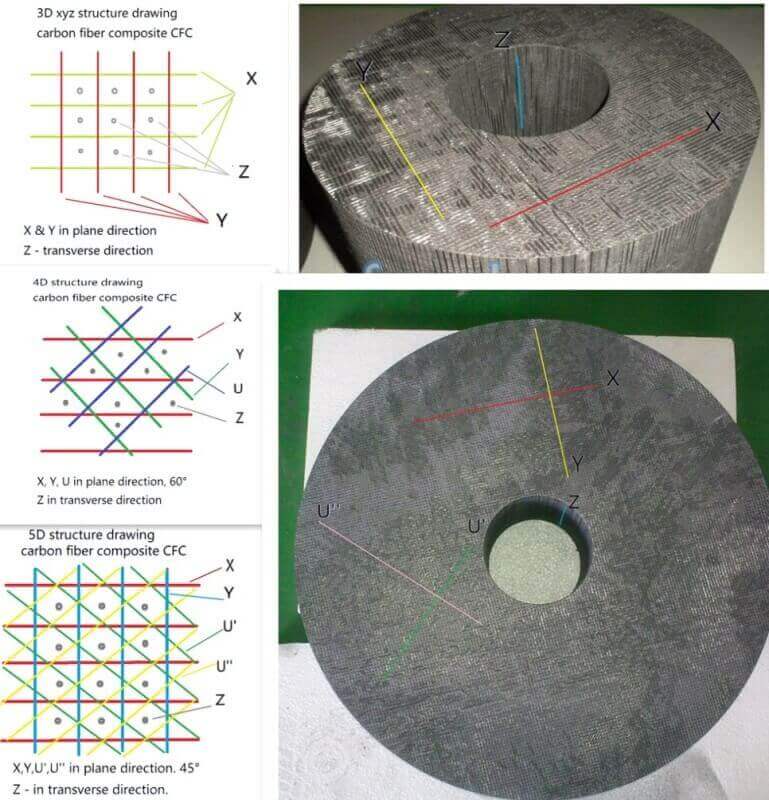
Carbon fiber composites are classified according to fiber architecture, matrix type, and reinforcement dimensionality. By fiber architecture, composites range from unidirectional (all fibers aligned in a single direction) to 2D laminated fabrics, 2.5D interlocked structures, and fully integrated 3D or multi-directional woven preforms-67. By matrix material, composites are categorized as carbon/carbon (C/C) with all-carbon matrices, carbon fiber-reinforced polymer (CFRP) with thermoset or thermoplastic resin matrices, and carbon-ceramic composites for high-temperature oxidation-prone environments. Composites can be further classified by precursor type (PAN-based, rayon-based, or pitch-based carbon fibers), with each exhibiting distinct thermal conductivity, mechanical strength, and purity profiles suited to specific operating conditions-63.
3. Manufacturing Process: From Fiber to High-Performance Composite
The production of high-quality carbon fiber composites involves a carefully orchestrated sequence of precision engineering steps. Preform Fabrication begins with carbon fiber tows (typically PAN-based T700/T300 grades) that are woven or braided into 2D, 2.5D, 3D, or multi-directional architectures tailored to meet specific mechanical and thermal requirements-61. Matrix Densification then follows one of two primary pathways. The gas-phase route employs Chemical Vapor Infiltration (CVI) or Chemical Vapor Deposition (CVD) , where hydrocarbon gases decompose at high temperatures to deposit pyrolytic carbon within the preform pores, achieving exceptional matrix uniformity and purity-61. The liquid-phase route relies on pressure impregnation and carbonization (PIC) , where thermosetting resins or coal tar pitches are impregnated under high pressure (up to 100 MPa), followed by carbonization at temperatures around 1000°C to convert the matrix to carbon-61. Multiple densification cycles are typically required to achieve target densities above 1.8 g/cm³, with intermediate machining to remove surface crusts that impede further infiltration-67. Finally, Graphitization subjects the densified composite to temperatures exceeding 2000°C (up to 3000°C), transforming the amorphous carbon matrix into highly ordered graphite crystals that enhance thermal conductivity and reduce residual stress-63.
4. Performance Characteristics: Data-Driven Engineering
3D 4D 5D carbon fiber composite CFC structural diagram drawing material (1)
Carbon fiber composites deliver an unmatched combination of material properties that set them apart from conventional metals and ceramics. Mechanical Performance is exceptional: carbon fiber composites exhibit tensile strength 5–10 times higher than steel and 100 times higher than aluminum alloy, yet their density is only one-third to one-quarter that of steel, enabling extraordinary lightweight structural solutions-64. Thermal Stability is equally impressive: these materials retain 85% of room-temperature strength at 2500°C under inert atmospheres, with a maximum theoretical service temperature of 2600°C to 3000°C depending on fiber type and matrix composition-64-66. The low coefficient of thermal expansion (CTE) minimizes dimensional changes during thermal cycling, ensuring consistent performance in precision applications. Chemical Durability is outstanding: carbon fiber composites exhibit strong acid-resisting and alkali-resisting properties, making them suitable for corrosive environments in chemical processing, fertilizer plants, and oil field operations, where they significantly outperform traditional sealing materials–.
5. Applications Across Industries
The aerospace industry is the largest adopter of carbon fiber composites, where they constitute up to 50% of airframe weight in modern aircraft like the Boeing 787, reducing weight by approximately 20% and substantially improving fuel efficiency–. In defense and space applications, carbon/carbon composites are indispensable for rocket nozzles, heat shields, atmospheric re-entry thermal protection systems, and hypersonic vehicle components that must withstand temperatures exceeding 3000°C–-64. The automotive industry increasingly relies on carbon fiber composites for lightweighting; using these materials in vehicle structures can achieve weight reductions of 100–350 kilograms per vehicle, directly translating to lower emissions and extended electric vehicle range–. Beyond transportation, carbon fiber composites find critical applications in semiconductor manufacturing (furnace linings and chemical vapor deposition reactors), metallurgy (vacuum heat treatment furnace insulation), renewable energy (wind turbine blades and thermal energy storage systems), and advanced medical devices (biocompatible bone scaffolds and prosthetics)-63-64.
6. Market Outlook and Growth Trajectory
The global carbon fiber composite materials market is experiencing robust growth. Valued at approximately USD 27.8 billion in 2024, the market is projected to expand to USD 54.1 billion by 2032, representing a compound annual growth rate (CAGR) of 7.4%–. Driving this growth are accelerating demand for lightweight, high-performance materials across aerospace, automotive, wind energy, and hydrogen storage sectors, alongside continuous advancements in composite manufacturing technologies that are reducing production costs and expanding application possibilities–.
7. CFCCARBON CO., LTD: Your Trusted Manufacturing Partner
CFC Carbon Co., Ltd., headquartered in Beijing’s Yizhuang Economic Development Zone, is a globally recognized leader in carbon fiber composites, graphite felts, and pyrolytic graphite products-1. The company operates state-of-the-art production facilities equipped with the largest equipment fleet and most comprehensive detection infrastructure in the domestic carbon composite industry-1. Backed by a research and development team that includes scientists with more than 45 years of experience from China’s premier carbon composite research institutes, CFCCARBON has vigorously advanced application research and secondary development of specialized technologies, focusing on solving low-cost preparation challenges and enabling batch production-1. The company’s ISO 9001-certified management system ensures rigorous quality control at every production stage.
CFCCARBON offers distinct competitive advantages that create exceptional value for global clients. Product Quality is assured through stringent testing protocols covering density, thermal conductivity, flexural strength, and purity for every batch. Cost Efficiency is achieved through vertically integrated manufacturing and economies of scale, enabling CFCCARBON to offer pricing that is typically 15–20% lower than Western and Japanese competitors without any compromise on material specifications. Delivery Reliability is a cornerstone of CFCCARBON’s service model: standard orders are fulfilled within 2–3 weeks, supported by streamlined logistics and real-time shipment tracking. Packaging employs triple-layer waterproof and shock-absorbent materials to ensure damage-free global delivery. Technical Support is provided by an experienced engineering team that offers expert guidance on material selection, custom design solutions, and application-specific optimization. Free Samples are available for qualified clients to validate material performance before committing to full-scale orders. This comprehensive value proposition has earned CFCCARBON the trust of industrial partners across North America, Europe, and Asia.
To explore how CFCCARBON’s carbon fiber composite solutions can address your high-temperature, high-performance material challenges, contact the marketing team directly.
CFC Carbon Co., Ltd.
Address: Yizhuang Economic Development Zone, Beijing 100176, China
Marketing Center: +86-18910941489
Tel: +86-10-80828912
Fax: +86-10-80828912
Email: potter@cfccarbon.com
Website: www.cfccarbon.com